Read time: 2 minutes
Continue to the bottom for articles and information relevant to you from around the web.
Many of you are doing both resistance training and cardiovascular endurance training and rightfully so.
Many of you may be trying to follow the 80/20 rule regarding endurance training, meaning that 80% of your training should be low intensity, i.e. zone 2.
I’ll put the 80/20 rule aside for now, that will be its own conversation.
If you are trying to stay in zone 2 based on what your watch is giving you, you may have found yourself needing to walk or jog at an uncomfortable pace. Now, if you are new to endurance training, then this may be what you need.
When I first started working on my zone, I could only jog for about a mile before I had to slow down to a power walk.
I felt ridiculous.
But if you are not new to endurance training, your watch is probably lying to you.
Before I get into the details, I am assuming that you have your watch set up accurately with your max heart rate and preferably, your heart rate reserve. Or have data from a VO2max test that you can input. If you have none of these and you’re just going off your watch, which could be 220-your age, then you might as well not use the watch.
Those zones are most likely way off. But I digress.
Today I was running an easy 45-minute run. I knew for me, that would mean I would get about 4.5 miles. I live in central Texas, and it is still summer here. I had to run after I dropped my son off at school. I got started around 8:30am and it was already above 80, with an even higher feels like temperature.
I started my run slowly and then built into my comfortable pace about a mile into it. I use RPE when I’m running since how I am feeling fluctuates from day to day. I do wear a watch that has been programmed properly, and I would check it compared to how I was feeling. My breathing stayed steady the entire time and my pace only fluctuated 10-15 seconds per km, depending on hills and whether I was running directly into the sun or not.
Let’s say the top of my zone 2 is 155bpm, as I was running, I noticed my HR would sometimes drift up to 160bpm, even though my effort and breathing were the same.
The heat was causing my HR to rise. This is cardiac drift.
Does this mean I was no longer in zone 2? No. Our bodies don’t switch off or on based on a set HR. Think of it more like a dimmer switch. And it’s not just based off your HR. Your breathing, effort, hydration, temperature, and more, all impact what is happening in your body.
I say all this to say, don’t marry yourself to a specific HR and think you have to force yourself to stick to it. If your effort stays the same and breathing rate isn’t increasing, then your increasing HR can be a number of other factors.
Using the talk test is a great way to ensure you are keeping your easy pace, truly easy. If you can hold a conversation without sounding like you are being chased by a grizzly bear, then you are there.
Don’t make running any harder than it needs to be. Keep easy days easy.
And don’t stress yourself out if your HR is a beat or two over your predicted Zone 2.

Jason White is a Tactical Dietitian Coach who specializes in working with First Responders, Military Athletes, and Hyrox athletes. jason@tacticaldietitian.com
Check out the peer-reviewed articles below to level up your nutrition and performance knowledge:
- Work rate adjustments needed to maintain heart rate and RPE during high intensity interval training in the heat PMID 39981303 This article asserts that mantaining RPE and target heart rate requires a decline in work rate with heat in order to mitigate cardiac drift.
- Cardiovascular drift and maximal oxygen uptake during running and cycling in the heat PMID 32102057 Cardiovascular drift corresponds with decriments in VO2 max in both cycling and running during training in the heat. Heart rate can increase around 19% to 17% with a decrease in stroke volume of 20% to 15% when running and cycling respectively.
Relevant content from Tactical Dietitian:
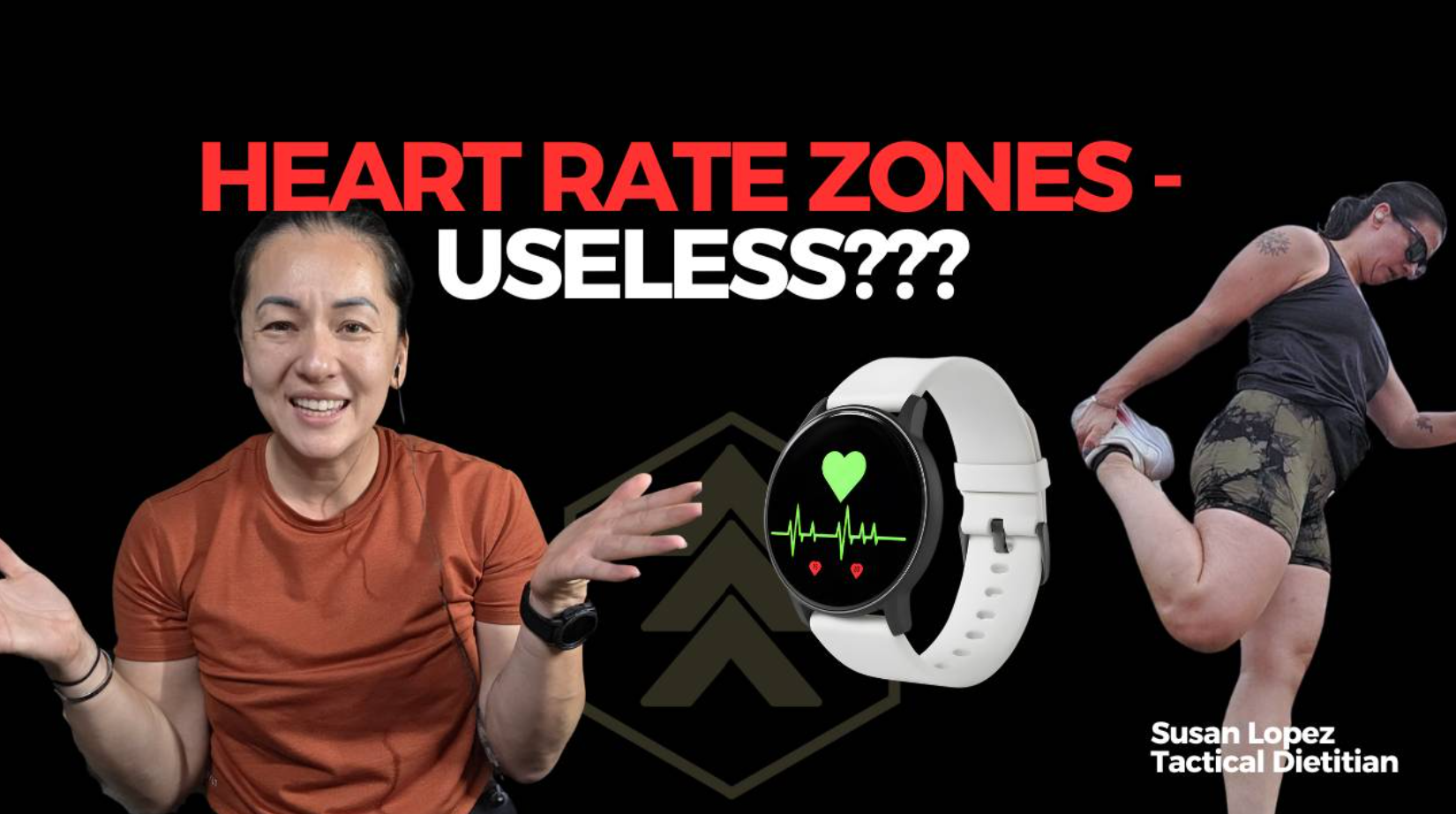
- Is Heart Rate Training Useless? Does heart rate zone training or paying attention to your heart rate zones actually matter? Does what your Garmin says about your heart rate zones or whatever other fitness device you're using really matter? Why do we even check heart rate zones? Check out this podcast episode to learn more about how HRT applies to you.

Responses