Read time: 5 minutes
Continue to the bottom for articles and information relevant to you from around the web.
In fact, you have probably done this yourself. One of the most common mstakes I see with athletes and high performers is this:
Their training has progressed, but their nutrition hasn't.
Training volume increases - more mileage, more weightlifting, more high intensity training, 2-a-days, then using the same macros and calories from 6 months ago or even 2 years ago.
Your nutrition needs must change as your training changes.
Keeping your nutrition structure static throughout the training year is a sure-fire way, especially in high-performers like special operations or competitive athletes, to end up in a state of low energy availability.
Low energy availability is a state where there is not enough energy being provided to support physical training AND biological health.
The body cares about 2 things on a primal level: survivial and procreation. When energy needs are chronically not met, one of those will suffer - namely testosterone and thyroid hormones are the first to go.
Here is how you can avoid this common nutrition pitfall.
Create a Performance Roadmap
When I work with my athletes, the first thing we do is create a Performance Roadmap.
A Performance Roadmap takes the guesswork out of programming using a periodized nutrition strategy.
Nutrition periodization simply means intentionally adjusting nutrition to support your training and your goals.
It does not mean randomly changing your macros every morning.
Think about the difference between:
Recovery day → Moderate training day → Hard training day → Two-a-day
Those aren't the same physiological demands.
So why would we automatically fuel all four exactly the same way?
Your harder training days may require substantially more energy and carbohydrate than your easier days. At the same time, an easier or recovery day isn't an excuse to dramatically restrict food. Recovery itself still requires energy, carbohydrate and protein.
And periodization can happen across larger training cycles too.
Someone early in an event-preparation cycle may have different body-composition and fueling priorities than that same athlete approaching peak training. As performance becomes the priority, carbohydrate availability may become increasingly important for supporting training, glycogen availability and recovery.
Don't change everything at once
You have to go slow to go fast. Most people get excited about making changes to their life and try to change too many things at one time.
When you work in a high demand environment with a high mental load, which is common in first responders, adding more to an already full plate is a recipe for disaster.
If you calculate your current needs and discover that your current intake is significantly different, you don't necessarily need to overhaul your entire diet NOW.
Find the biggest gap first.
If you're consistently struggling with energy, fatigue and recovery, carbohydrate intake may be an important place to look. If you're struggling to maintain lean mass or consistently falling short on protein, start there.
Pick the area that's most likely to improve your current problem, work on becoming consistent with it, and then move to the next variable.
Try this with your training this week
Pull up your training schedule for the next seven days.
Identify your:
Lower-intensity days
Moderate days
Highest-demand days
Then ask yourself: Does the way I'm eating actually reflect those differences? Especially when it comes to overall calories and carbohydrate intake and timing.
Pay attention to the days when your energy drops, your training quality is poor, you're unusually hungry later in the day, or recovery seems to take longer.
Those are clues. Look for patterns and then use those patterns to make better fueling decisions in real time.
Not sure what your starting numbers should be?
Check out the Performance Energy & Macro Calculator.
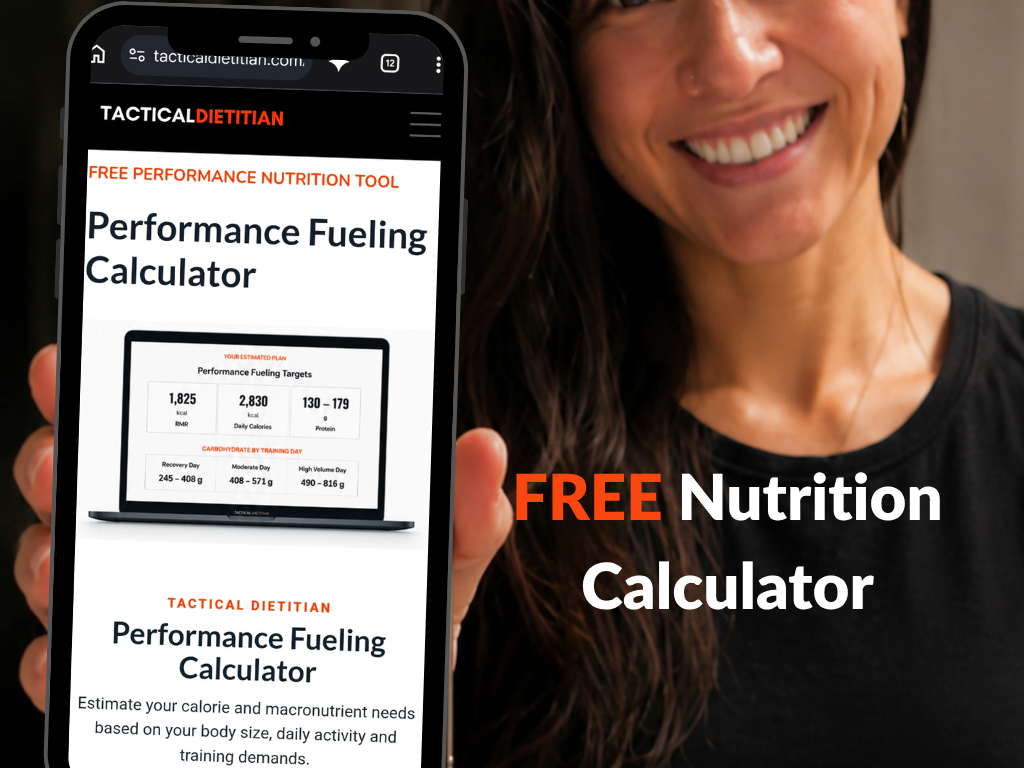
Try the Energy and Macro Calculator
Use it to estimate your current calorie, protein, carbohydrate and fat needs based on where you are right now. As your training, body composition, and goals change, come back to reassess.
Check out the articles below to level up your nutrition and performance knowledge:
- Case Study: Unfavorable but Transient Physiological Changes During Contest Preparation in a Drug-Free Male Bodybuilder PMID: 28770669 This case study shows a male who underwent 8 months of contest preparation, energy intake fell from approximately 3,860 to 1,724 kcal/day. Testosterone declined from 623 to 173 ng/dL, RMR decreased by over 20%, while peak anaerobic power decreased from 753 to 537 Watts. Many of these measured were restored after 5 months of increased intake showing the effects of low intake and low energy availability.
- Hungry runners—low energy availability in male endurance athletes and its impact on performance and testosterone: mini-review PMID: 37052052 The review connects low energy availability in male endurance athletes with lower testosterone, suppressed metabolic rate, reduced bone density, greater injury/illness risk, and poorer recovery.
Relevant content from Tactical Dietitian:
- How to Know if You Have a Strong and Healthy Metabolism. Learn my DATES method to subjectively assess whether or not you are fueling your body to train and recover. https://www.tacticaldietitian.com/blog/metabolism
- Can You Boost Testosterone Naturally? In this podcast episode we discuss if it's possible for athletes in the tactical community to naturally increases their testosterone levels. This podcast is for anyone who serves in the military, law enforcement, first responders, fire and rescue, or anyone who wants to know more truth about nutrition and performance.
Download the Tactical Dietitian App to get Access to our community and resources for free!

Responses