Especially over the age of 40.
Read time: 2 minutes
Continue to the bottom for articles and information relevant to you from around the web.
There is always that guy - "Anything over 10 reps is cardio"
And there is no shortage of influencers on the internet bragging about their ability to get shredded and jacked yet claim to do zero cardiovascular activities.
The first falasy that we have to address is that being shredded or jacked means that you can perform at a high level. If that were true than stage ready body builders would be the fittest folks on the planet but we know that is untrue.
Leaness is not a sign of fitness.
The second falasy that we need to put to bed is that cardiovascular activity is not essential.
In the real world of performance cardiovascular fitness is what drives the entire train. And after 40, your cardiovascular fitness is the strongest predictor of mortality.
And after 40, your cardiovascular fitness is the strongest predictor of mortality.
Almost 1 in every 3 deaths in the United States is caused by cardiovascular disease (CVD). CVD is the leading cause of on-duty deaths in firefighters with 50% dying of sudden cardiac arrest, anurysm, or stroke. For every one (1) on-duty death there are 17 non-fatal line-of-duty CVD events in US firefighters.
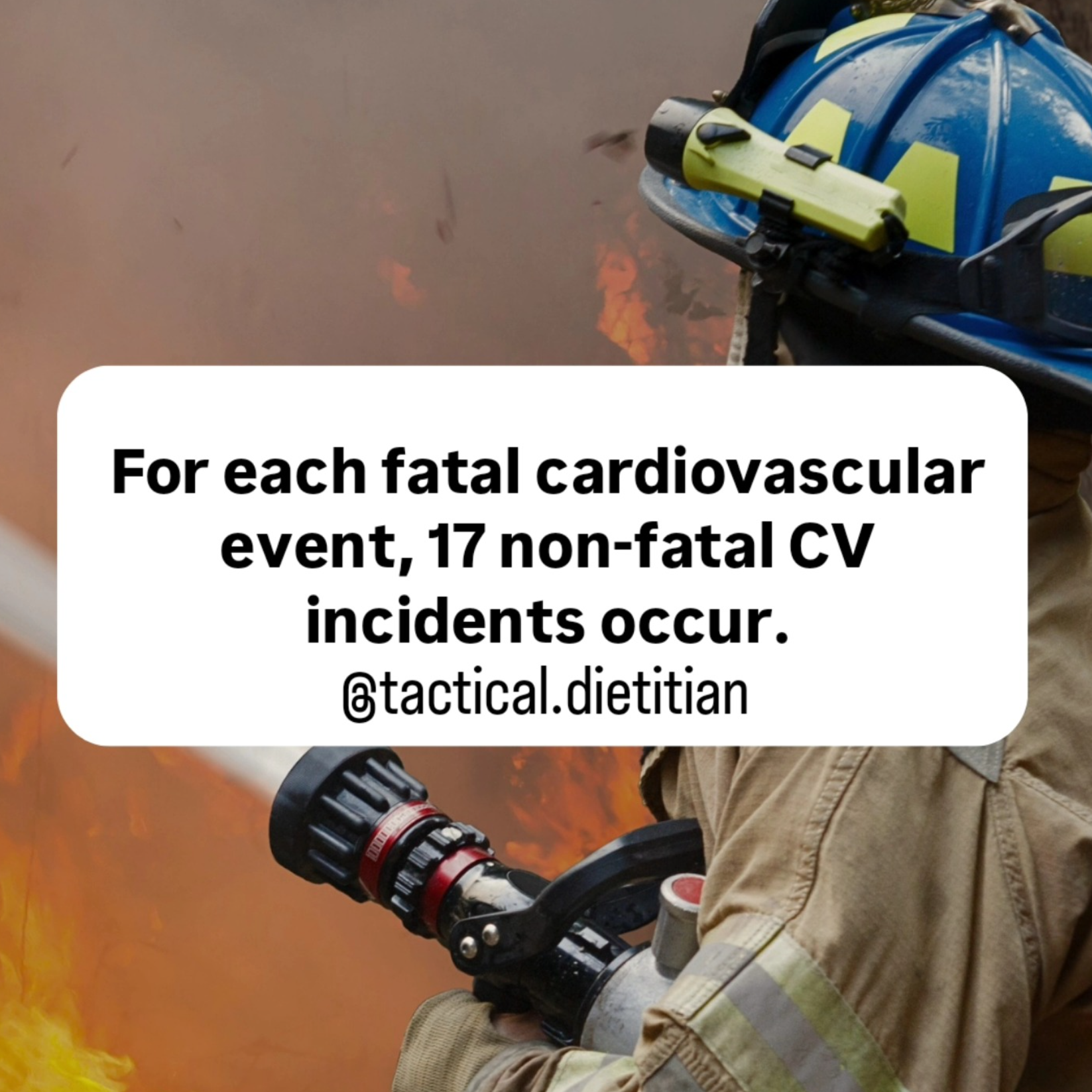
For every one (1) on-duty death there are 17 non-fatal line-of-duty CVD events in US firefighters.
So how do we measure cardiorespiratory fitness and can it really be improved after we turn 40.
Cardiorespiratory fitness is most commonly measured using VO2 or VO2 max - the maximum amount (volume) of oxygen that the body can take in and use during maximum exercise.
At Tactical Dietitian, we take a direct measurement of an athlete's VO2 using gas exchange. We look not only at VO2 but we can also see how efficient an athlete is at using carbohydrates or fats for energy production at each intensity of exercise.
Interested in VO2 Testing? Schedule an appointment here.
For the average, active male a VO2 of 45 ml/kg/min is considered appropriate around age 30. Firefighters should have a VO2 near 42 ml/kg/min to be considered fit for the job. In special operations, the benchmark is 45 to 60 ml/kg/min.
After age 40, VO2 max declines by roughly 10% every decade if we don't actively work to preserve it. A VO2 of 35 mL/kg/min at age 40 may seem acceptable today, but by age 80 it could decline to around 23 mL/kg/min.
Those who continue or begin to train even after the age of 40 can significanlty reduce their risk of CVD, poor cardiorespiratory fitness, and mortality. For every 1 point (ml/kg/min) increase in VO2 you increase life expectacy by 45 days.That's the difference between maintaining independence and struggling with everyday activities for many older adults.
For every 1 point (ml/kg/min) increase in VO2 you increase life expectacy by 45 days. That's the difference between maintaining independence and struggling with everyday activities for many older adults.
Higher cardiorespiratory fitness is also associated with fewer non-fatal cardiovascular events in men. There are also positive benefits related to cancer risk, obesity, hypertension, and insulin resistance.
For those who physical fitness is and should be a job requirement - firefighters, law enforcement officers, military, etc. - Cardiovascular fitness is not optional.
Check out the articles below to level up your nutrition and performance knowledge:
1. Dietary Preferences and Nutritional Information Needs Among Career Firefighters in the United States PMID: 26331100. This article reviews the relationship between nutrition, obesity, and chronic disease in career firefighters. 75% of career firefighters have a desire to learn about nutrition but have insufficient knowledge.
2. Midlife Cardiorespiratory Fitness and the Long-Term Risk of Mortality: 46 Years of Follow-Up PMID: 30139444. This study followed respondants from the Copenhagen Male Study for 46 years to assess the relationship between cardiorespiratory fitness and mortality. It found that cardiovascular fitness was related to longevity in middle-aged men free from CVD.
Relevant content from Tactical Dietitian:
- Fueling Firefighters for Performance: Nutrition Strategies for First Responders. In this podcast episode I talk with Megan Lautz RD from @rescue_rd about strategies that firefighters can use to improve nutrition and overall health. https://www.tacticaldietitian.com/blog/rescuerd
- Training for Firefighters with Austin Womack. Austin specializes in training and performance for wildland firefighters. In this clip we discuss how training should be incorporated into daily programming. Full video and article at https://www.tacticaldietitian.com/blog/wildlandfire
 |

All of our content in your hand at any time.

Responses