Read time: 4 minutes
Continue to the bottom for articles and information relevant to you from around the web.
You might have been thinking lately that going low carb or even carnivore might be a good idea for you.
Most firefighters, LEOs, and military athletes have heard their buddies talk about how decreasing their carb intake helped them achieve their goals. And you are thinking that this could potentially help with your own physical or mental performance.
But is that the right move? Let's talk about why it might or might not be the right answer for you.
The topic is more nuanced that you might initially think. You might even expect that I would say it isn't the right move for you.
I think that answer is not always straightforward to be honest.
Let's be clear about my feelings. I am not going to recommend that you go very low carb which for most people is less than 100 grams of carbohydrate per day.
The majority of the athletes I work with require that in just their first post training meal.
So what are the proposed benefits of following low-carb diets?
Many of the proposed benefits include:
- Improved insulin or blood sugar levels
- Improved metabolic adaptation
- Improved body composition or fat loss
- Improved cholesterol or lipid levels
- Improved cognitive performance
A low carbohydrate diet can actually do all these things BUT...
It's not necessarily because you are eating less carbohydrates. It is often due to the fact that you are eating less CALORIES overall.
In fact, when calories are equal, and one person is eating low carb while the other is eating a high carbohdyrate diet the results are often the same.
And there is not way to beat around the bush...
Carbs will out perform fats in athletic performance - speed, power, endurance, all of it.
That doesn't mean that low carb is off the table.
So how do you eat low carb and still perform?
- LOW CARB doesn't need to be NO CARB.
A modified carbohdydate intake can improve metabolic health and flexibility when used appropriately. If you are looking to lose a significant amount of weight (i.e. greater than 20 lbs) you may benefit from decreasing your carb intake significantly.
A 1:1 ratio of carbs to protein is often enough to put you into a calorie deficit.
For example, a 230 lb active male would consume his goal weight of 200 lbs in protein and carbs to reach a calorie intake of ~ 1600 calories. Add in half his goal weight in fat calories (100 x 9 kcals = 900 calories) and you get ~ 2500 kcals.
For most active males, this will result in weight loss. Key word: ACTIVE.
2. PERIODIZE your low carb cycles.
This is a great strategy for anyone who wants to improve their metbaolic flexibility even if they are not desiring to lose a significant amount of weight.
In a periodized strategy, we plan low carb cycles near periods of lower volume training and base building Zone 2 heavy cycles.
With this strategy we don't touch high intensity work more than once a week or at all during the training phase.
This allows for adaptations to occur without unnecessarily increasing stress on the body or metabolic system.
One important adaptation that can occur is greater utilization of fat as a fuel source at low intensities or greater fat utilization at anaerobic threshold.
Meaning you will burn fat more efficiently during cardiovascular training at varying intensities.
Helpful Journal Articles and Web Articles:
- Effects of energy-matched low-versus high-cabrohdyrate diets... In this meta-analysis 905 participants followed a low-carb or high carb diet. Results showed slightly better health outcomes, but worsening LDL-C. PMID: 41493485
- Periodized carbohydrate intake influences metabolic flexibility and indices of running economy... Male recreational runners with an average VO2 Max of 51 ml/min/kg following a low cabrohdyrate diet showed reduced carbohydrate utilization during exercise without a noticeable improvement in performance. PMID: 41624183
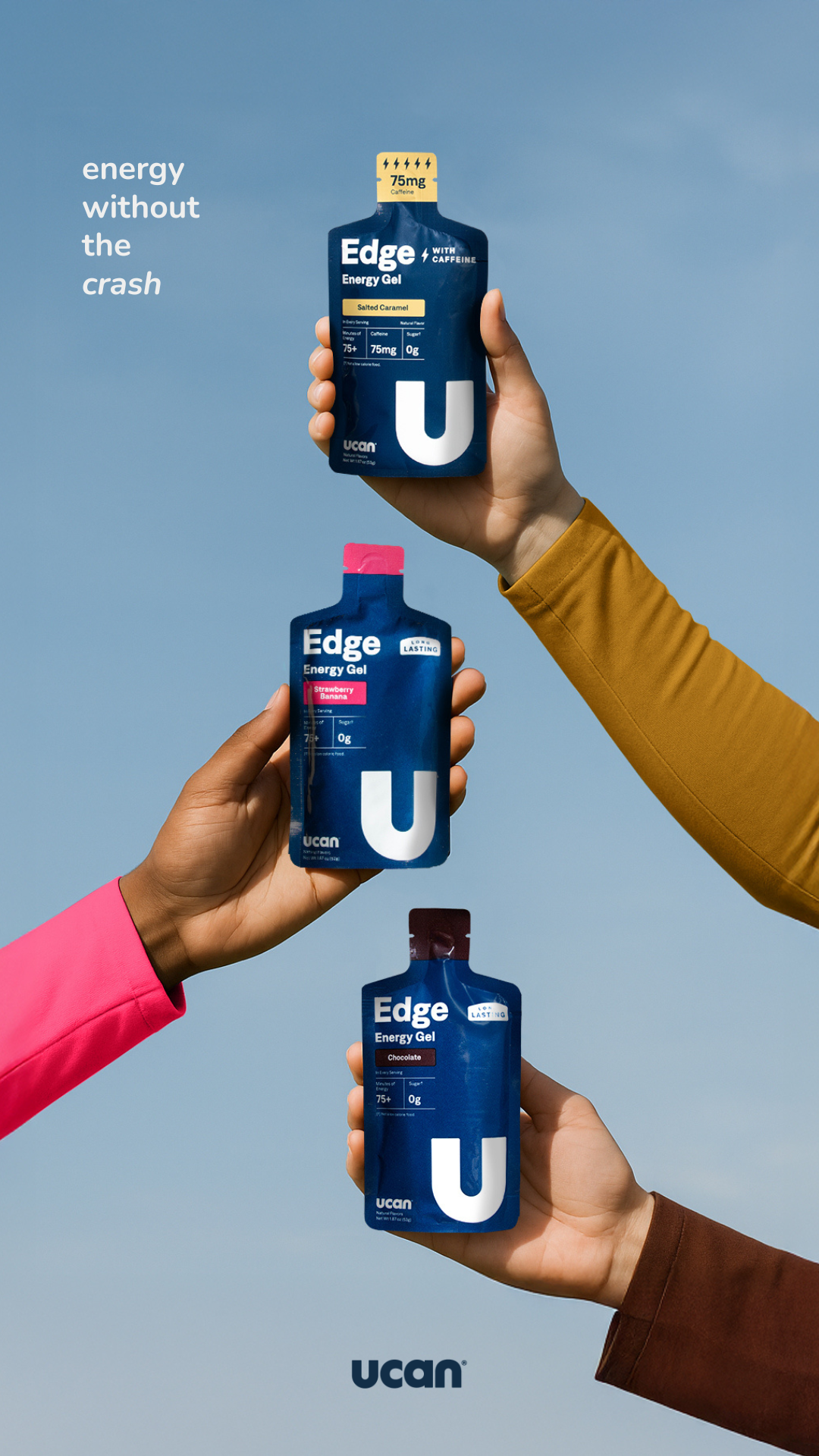
UCAN’s proprietary low-glycemic carbohydrate, LIVSTEADY™ (formerly known as SuperStarch) is real food, not just an energy booster. Its complex structure means our body releases its energy slowly, so there's no quick sugar spike like with simple carbs. LIVSTEADY™ is only found in UCAN products.
Shop 10% at https://ucan.co/
Some links may contain affiliate purchases where I am compensated. Rest assured I never recommend anything I don't trust or use myself.

Responses